Renko Line Break Indicator
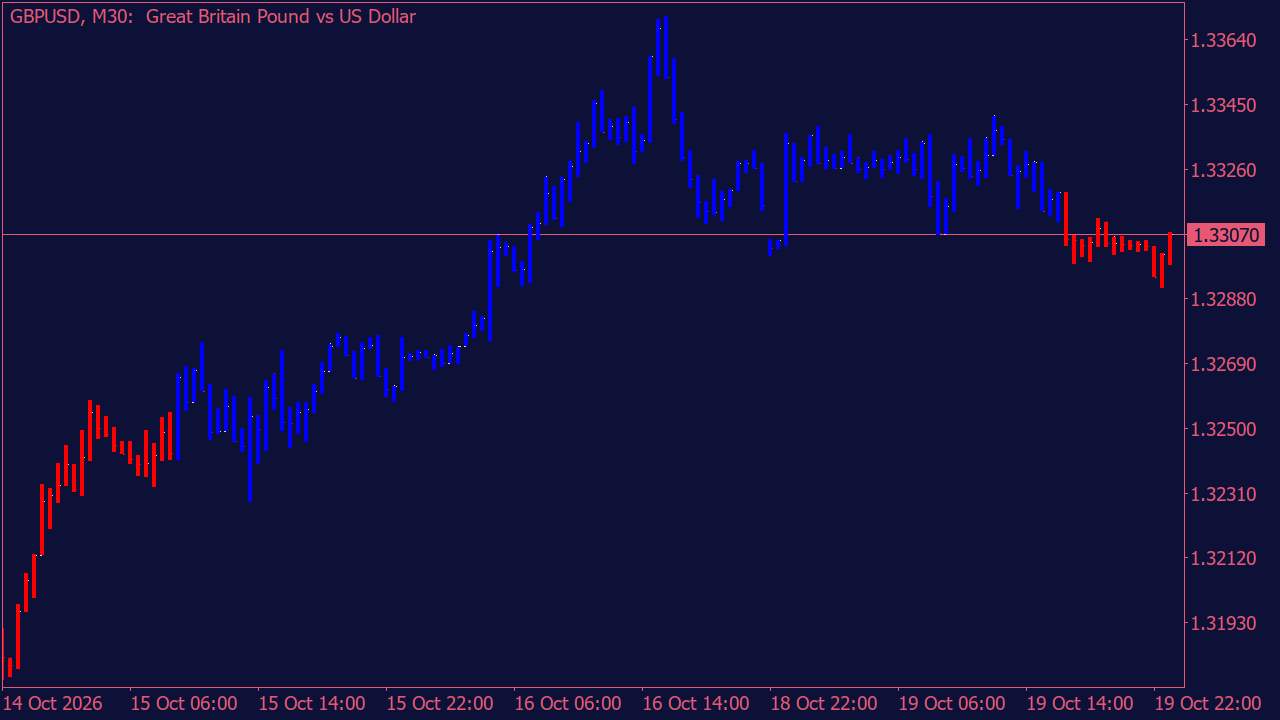
The 3 Line Break Indicator is worth a closer look if you've ever watched a promising trend suddenly turn against you, only to continue in its original direction a few candles later. It happens all the time. A sharp drop looks like a reversal, buyers return, and the whole picture changes again. But was there ever a genuine trend change in the first place? That's the interesting thing about this indicator. It doesn't treat every red or green candle as a reason to change direction. Instead, it checks whether price has broken the highs or lows of a selected number of previous bars. Blue bars show upward conditions, while red bars mark downward conditions. With the default three-bar setting, even a sharp move against the trend won't necessarily change the indicator's direction. Try comparing it with regular candlesticks when the market gets choppy. You'll sometimes find that an apparent reversal hasn't crossed the levels that matter to the indicator. Other times, a single breakout changes the picture completely. It's a different way to look at price action, and one that might make you think twice before trusting the next convincing-looking reversal.

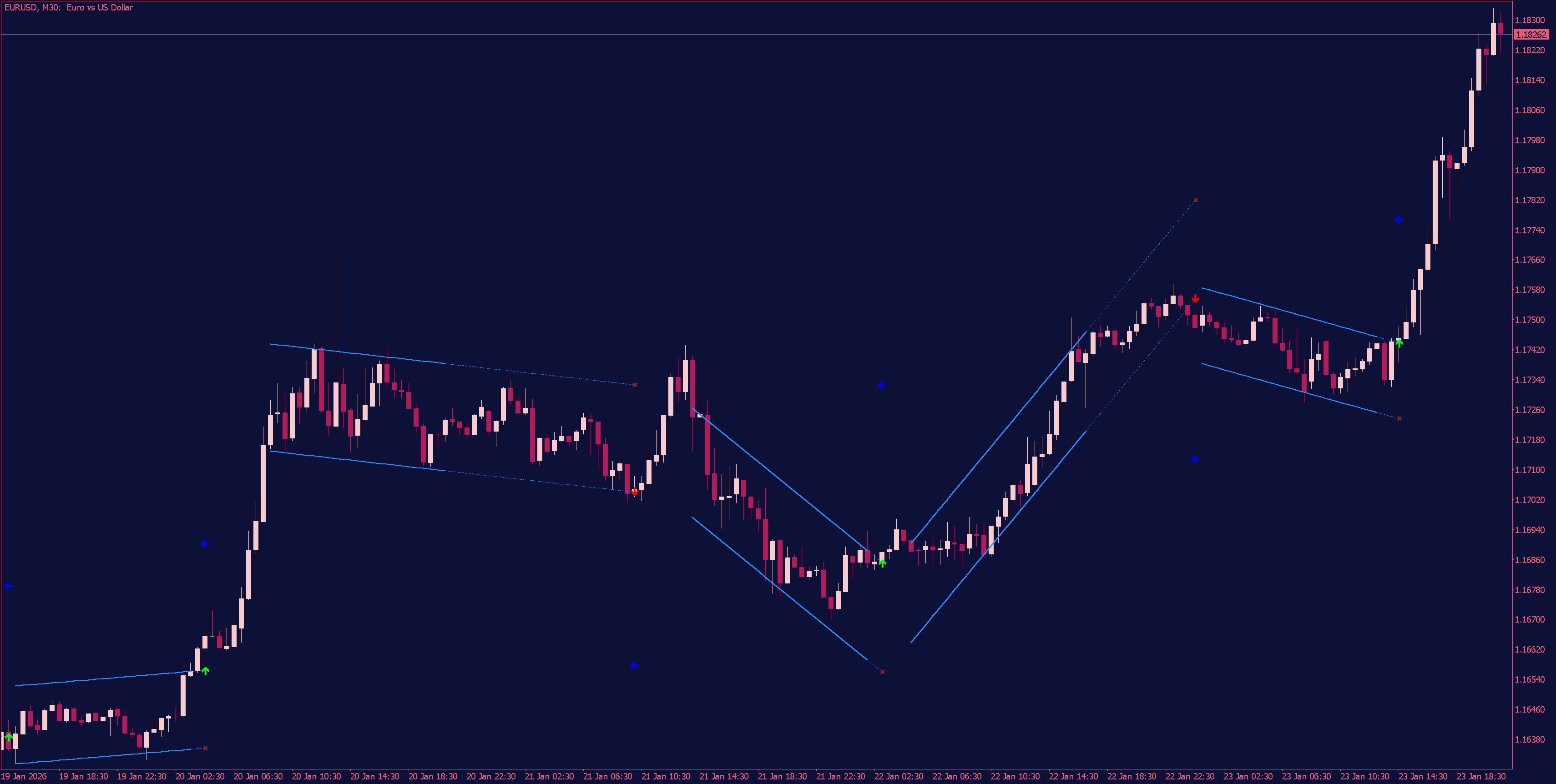
The Breakout Indicator with Arrows highlights significant price breakouts by displaying arrows at breakout points from key levels or consolidation zones. It helps traders quickly spot momentum shifts and potential entry opportunities for trend-following trades.
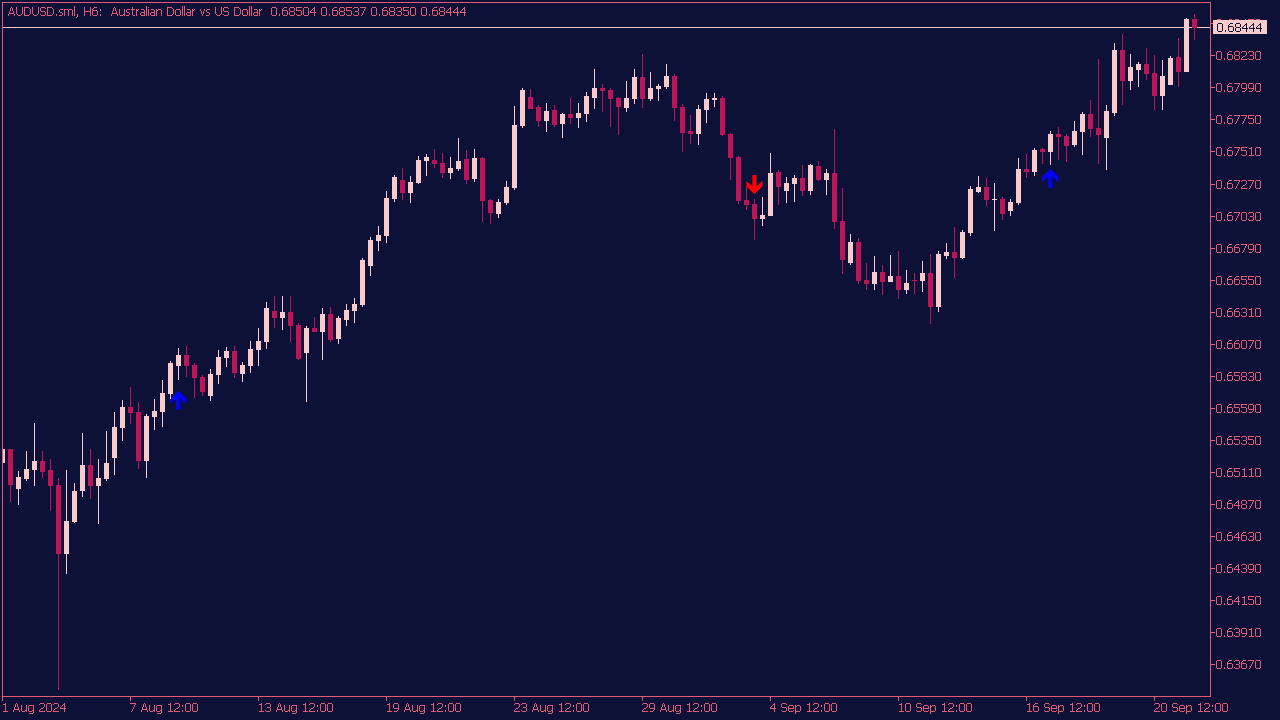
The Trend Arrows Sign Indicator is typically used to signal potential entry and exit points in trading based on trend direction. Trading rules generally include entering a buy position when an upward arrow appears, indicating a bullish trend, and entering a sell position when a downward arrow is shown, signaling a bearish trend. Traders often confirm these signals with additional technical indicators, such as moving averages or RSI, to reduce false signals. Risk management practices, such as setting stop-loss levels and position sizing, are also crucial to protect against adverse market movements.